Kava Tea: How It's Made, How Strong It Is, and How It Compares
Aug 25, 2026
What kava tea actually is
Dried, ground kava root in a permeable bag, steeped in hot water. Some are pure kava; many are blends, with kava sitting alongside other botanicals, and in those the kava content can be a small fraction of the bag.
It is the most familiar format on the shelf, because it looks like every other tea. That familiarity is most of its appeal — no strainer bag, no kneading, no unfamiliar routine. You already know how to do it.
Why it's the gentlest preparation
Kavalactones don't dissolve readily in water. They're lipid-soluble, which is why traditional preparation involves working the root hard by hand — and in some places adding coconut milk — rather than simply soaking it.
Steeping does very little of that work. Hot water sits around the root; nothing agitates it, nothing emulsifies it, and the bag keeps the material contained. Compare that with a strainer bag being squeezed and kneaded for five minutes, where the physical action is doing the extraction.
Then there's quantity. A tea bag holds roughly a gram or two. A strained preparation uses considerably more. Less material, less extraction.
The result is a light drink with kava's earthy, faintly peppery character and a mild tingle on the tongue. That tingle is the most reliable sign there's real kava in the bag.
How to make it well
- Use just-off-boiling water, not fully boiling. Brief warmth doesn't harm a prepared drink, but there's no benefit to scalding it
- Steep longer than you would black tea — ~5 minutes rather than 3
- Squeeze the bag against the side of the cup before removing it. It's not kneading, but it's better than nothing
- Add a fat. A splash of coconut milk or oat milk helps carry the kavalactones, and it softens the earthiness
- Drink it before a meal or well after. Food slows absorption
On heat and storage, keep the two separate: brief warming in a cup is a taste question, while sustained heat and light over weeks are what reduce kavalactone content. Unopened kava belongs in a cupboard, opened kava in the fridge — more on storing kava. Minutes in a cup and months on a sunny windowsill are not the same exposure.
Where it fits
Tea is a good introduction and a poor benchmark. It tells you whether you like the taste of kava, which is genuinely useful — kava is earthy, and not everybody takes to it. What it can't tell you is what a full serving is like, because a tea bag was never going to deliver one.
That's worth saying plainly, because a lot of people try kava tea, feel very little, and conclude kava doesn't work for them. What they've actually established is that a gram of root steeped in water is a gram of root steeped in water.
If the appeal of tea is that it asks little of you, kava gummies take that further — no steeping and no waiting, with a kavalactone figure stated per piece rather than left to the bag and the brew.
If you want the taste with more of the effect, strained powder is the traditional route and ready-to-drink is the measured one. We compare all six formats in the forms of kava.
Kava tea and the other botanical teas
Kava is not chamomile. It's a Pacific root with centuries of ceremonial and social use behind it — the drink people gather around. It belongs at the start of an evening rather than the end of one, and it sits alongside a conversation rather than replacing it.
Kava does not produce intoxication and is not a substitute for being drunk. Its calm is a distinct feeling that becomes clearer as you learn to recognize it — it arrives as a settling rather than a hit. If you're waiting for something alcohol-shaped, you're looking for the wrong signal.
What standardization changes
The variability in a tea bag — how much root, which cultivar, how long you steeped, whether you squeezed it — is the same variability that runs through every hand-prepared format. Standardized products move that decision from the cup to the label.
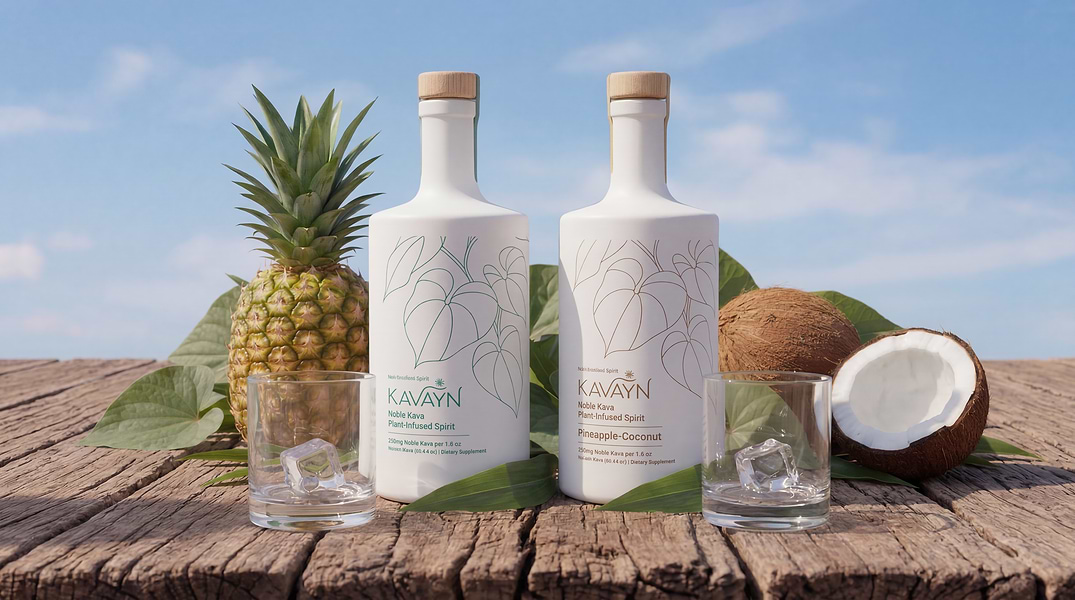
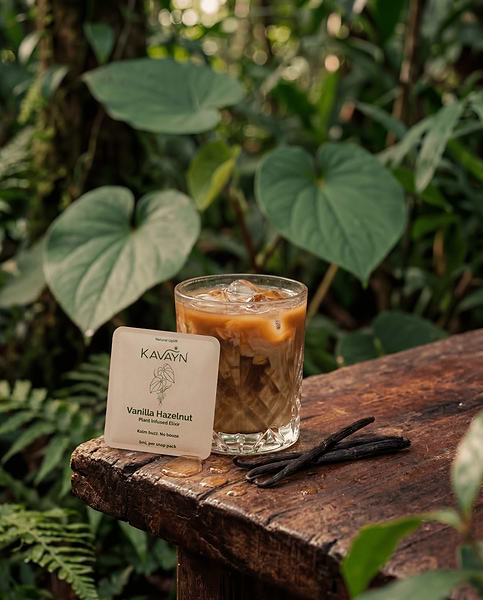
Kavayn's Noble Kava Spirits carry 350 mg of kavalactones per 1.5 fl oz pour, and Snap Packs 250 mg each. Vanuatu noble kava, a measured dose in every serving, tested every batch. Not more ritual — the ritual was always there — just less guesswork about what's in the glass.
Try it for yourself
Vanuatu noble kava. A measured dose in every serving. Tested every batch.