Ingredients & quality
Is kava alcohol-free?
Yes. Kava contains no alcohol. The root has none in it, and nothing in traditional or modern preparation introduces any — kava's effects come from kavalactones, which are an entirely different class of compound.
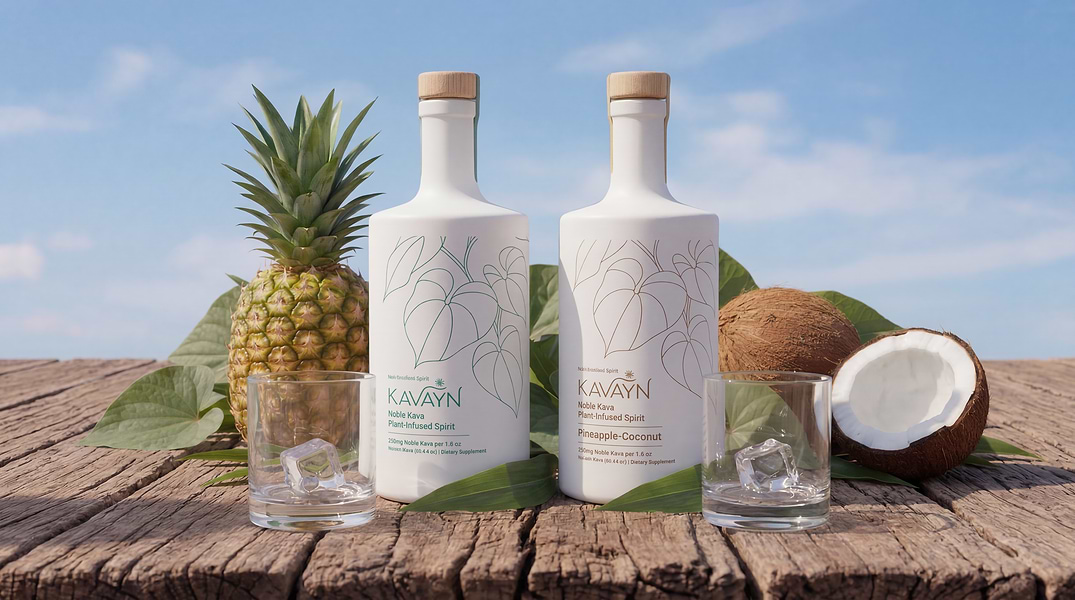
Why the question comes up. Products like Kavayn's are sold as non-alcoholic spirits, which sounds contradictory. The word describes the format — a concentrated pour, measured and mixed like a spirit, sold in a bottle that sits on the same shelf — not the contents. There is no ethanol in it.
Not everything in the non-alcoholic aisle is at zero. Several categories carry trace alcohol:
- Kava — none
- Kombucha — trace, typically 0.5% ABV or below
- De-alcoholised wine and beer — trace, usually up to 0.5% ABV
- Alcohol-free spirits — varies by brand; check the label
Kava is in the first line rather than the others. It isn't a drink that had alcohol removed; it never had any.
The extraction method matters here. Some botanical extracts are made using ethanol as a solvent, which can leave a residue. Kavayn's kava extract is made by supercritical CO₂ extraction, which uses carbon dioxide rather than any alcohol solvent — so there is no residual ethanol from the process either. Residual solvents are covered in the per-batch certificate of analysis.
What this means practically. Kava is suitable for anyone avoiding alcohol entirely — whether for religious observance, recovery, medication, pregnancy considerations, or simply because they don't drink. On the last two points, see the entries on medication and pregnancy for the separate questions those raise, which are about kava itself rather than about alcohol.
It is a different drink, not a replica. Kava is alcohol-free and produces its own experience — relaxed and clear-headed rather than intoxicated. That difference is the point of it.
Related questions
Try it for yourself
Vanuatu noble kava. A measured dose in every serving. Tested every batch.