Adaptogen Drinks vs Kava: What's Actually Different
Aug 26, 2026
What "adaptogen" actually means
The word comes from Soviet-era pharmacology in the 1940s, describing plants said to raise the body's non-specific resistance to stressors. The herbs most often used today are ashwagandha, rhodiola, ginseng, holy basil and schisandra.
Two things follow that matter when you are standing in front of a fridge.
It is a claim about a mechanism, not a description of a taste or a format. An adaptogen drink might be sparkling, still, sweet or bitter — the label tells you what is in it, not what it is like.
The proposition is cumulative. The category's own framing is that adaptogens work through sustained use, typically over weeks. That is why adaptogen brands sell subscriptions and multipacks rather than single bottles: the claim only makes sense over time.
What "botanical drinks" means
Less than you would hope. It is the broadest label in the category — plant-forward, in some way. That covers herbal infusions, bitters, aromatic sodas and most zero-proof spirits.
It is a useful word for a shelf and a poor one for a decision. If a drink describes itself as botanical and nothing else, the label is telling you about flavour, not effect.
What "mood-enhancing drinks" means
This is a marketing category rather than an ingredient one. The actives behind it range from adaptogens to nootropics to amino acids to kava, at doses that vary enormously between products — some meaningful, some decorative.
The only reliable move is to ignore the phrase and read what is actually in the bottle, and how much of it. A product that names its active and states the amount is telling you something. One that says "proprietary blend" is not.
Where kava is different
Kava is the root of Piper methysticum, drunk socially across Vanuatu, Fiji, Tonga and Samoa for centuries. Its active compounds are called kavalactones.
The structural difference from adaptogens is timing:
- Onset — roughly 10–20 minutes for extract shots and snap packs, 20–30 minutes for strained root
- Duration — about 2–4 hours, tapering off rather than stopping abruptly
- Per serving — you drink it on the evening you want it, rather than taking it daily and assessing later
The experience people describe is a settling rather than a hit, and it stays clear-headed. It is a distinct feeling that most people take a few sessions to recognise — if you are waiting for something alcohol-shaped, you are looking for the wrong signal.
And it is social. Kava has been the drink people gather around for centuries; it is the original unwinding ritual, not a supplement you remember to take.
Which suits what
Choose an adaptogen drink if you want something to build into a daily routine and judge over a month.
Choose kava if you want a drink for an occasion — something you pour on a Thursday evening, or hand to someone at a table, and notice that night.
They are not mutually exclusive, and the honest answer is that they are trying to do different jobs. Most of the confusion in this category comes from shelving them together.
Reading a label in this category
Whatever you choose, three things separate a serious product from a decorative one:
- A named active, with an amount. Not "proprietary blend"
- A stated serving size, so the amount means something
- Per-batch testing, ideally with the lab named
Almost nothing in the alcohol-alternative aisle can produce all three.
Where Kavayn fits
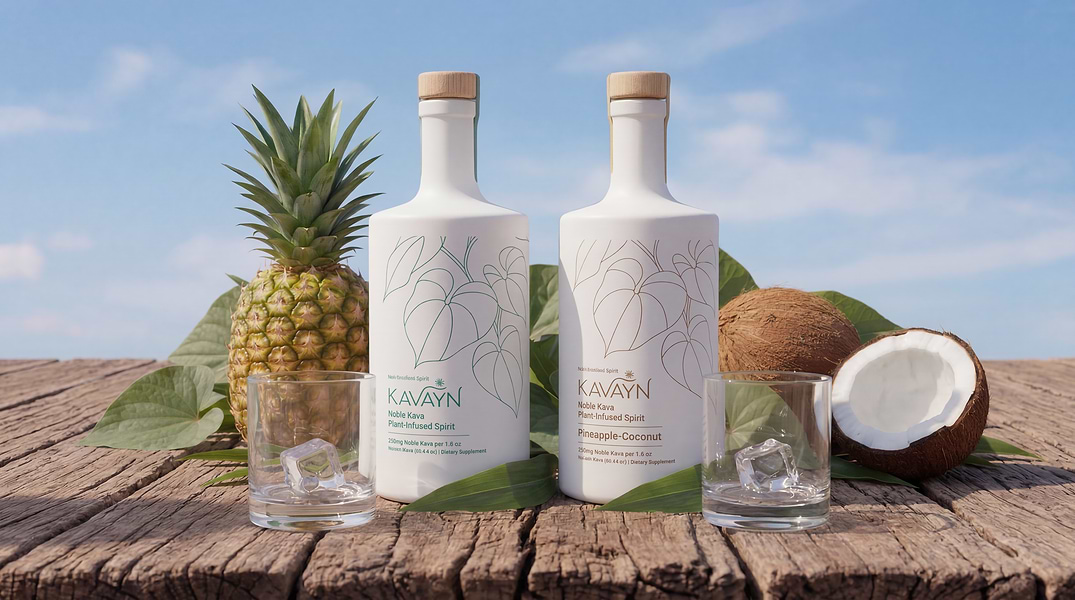
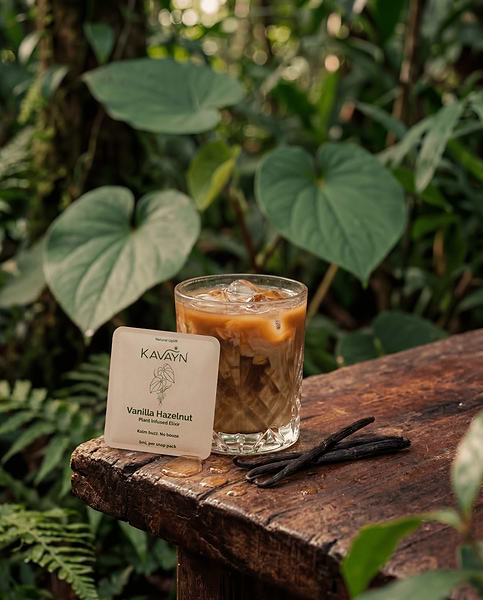
Kavayn makes non-alcoholic kava drinks. Noble Kava Spirits carry 350 mg of kavalactones per 1.5 fl oz pour, seventeen pours a bottle. Snap Packs carry 250 mg each, ten to a box. Vanuatu noble kava, a measured dose in every serving, tested every batch. 0% ABV at every stage.
Kava Gummies put the same Vanuatu noble kava into an edible, with 200mg kavalactones per gummy.If you are working through the alcohol-alternative categories more broadly, what to drink instead of alcohol compares all four. If you want to understand kava itself, the forms of kava covers how it is made and sold, and the kava FAQ answers the rest.
Try it for yourself
Vanuatu noble kava. A measured dose in every serving. Tested every batch.