The Forms of Kava, Compared: Root, Powder, Instant, Tea, Extract and Ready-to-Drink
Aug 24, 2026
The seven forms of kava
Fresh and dried root
Where all of it starts, and still how kava is drunk across Vanuatu, Fiji, Tonga and Samoa. Root is pounded or ground, kneaded in water and strained. It is the most involved preparation and the one carrying the whole ceremonial tradition — the drink people gather around, passed in a shell, finished in one go.
Suits: someone who wants the ritual as much as the drink.
More on kava root — the plant, which parts are used, and why strength varies between batches.
Traditional Grind powder
The dried, ground root sold for home preparation. Everything above applies: a bag, cool water, five minutes of kneading. Strength depends on the cultivar, the grind and how hard you work it. If you're choosing between varieties, our guide to the best types of kava covers the cultivars.
Suits: regular drinkers who have found a routine that gives them a consistent result.
More on kava powder — the two grinds, preparation step by step, and how to store it.
Instant kava powder
Ground fine enough to disperse in water without straining. Stir and drink. You consume the root material rather than filtering it out, so the texture is heavier and the taste more forward.
Suits: powder drinkers who want the preparation shortened.
Tea bags
Kava in a bag, steeped like any tisane. The most familiar format and the gentlest — steeping without agitation extracts far less than five minutes of kneading. Usually the lightest preparation on the shelf.
Suits: a first, low-commitment introduction to the taste.
More on kava tea — why steeping extracts less than kneading, and how to make it well.
Extract, tincture and paste
Concentrated preparations measured by dropper or spoon. Strength is whatever the maker states, which makes reading the label the whole job — concentration and the standard behind it vary widely between products. More on kava extract and how it's made.
Suits: anyone who wants a small measured amount without preparing a drink.
Ready-to-drink
Kava already prepared and portioned, with the dose on the label. It comes in two shapes.
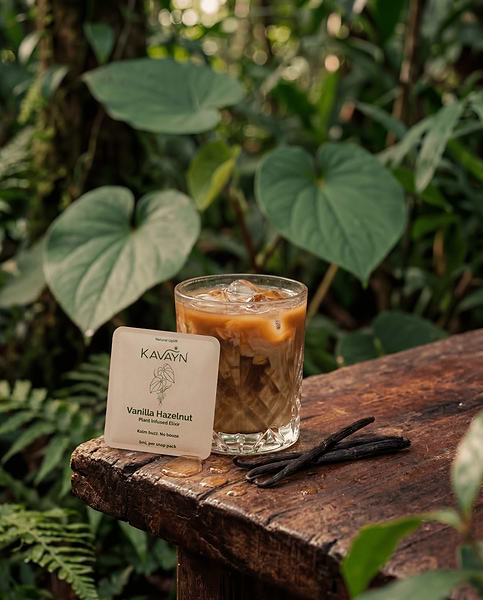
Concentrate sachets — a few millilitres to snap into whatever you're already drinking. Kavayn's Snap Packs are 5 mL, ten to a box, 250 mg of kavalactones each, 5 calories and 2 g of sugar. Pocket-sized, so they travel.
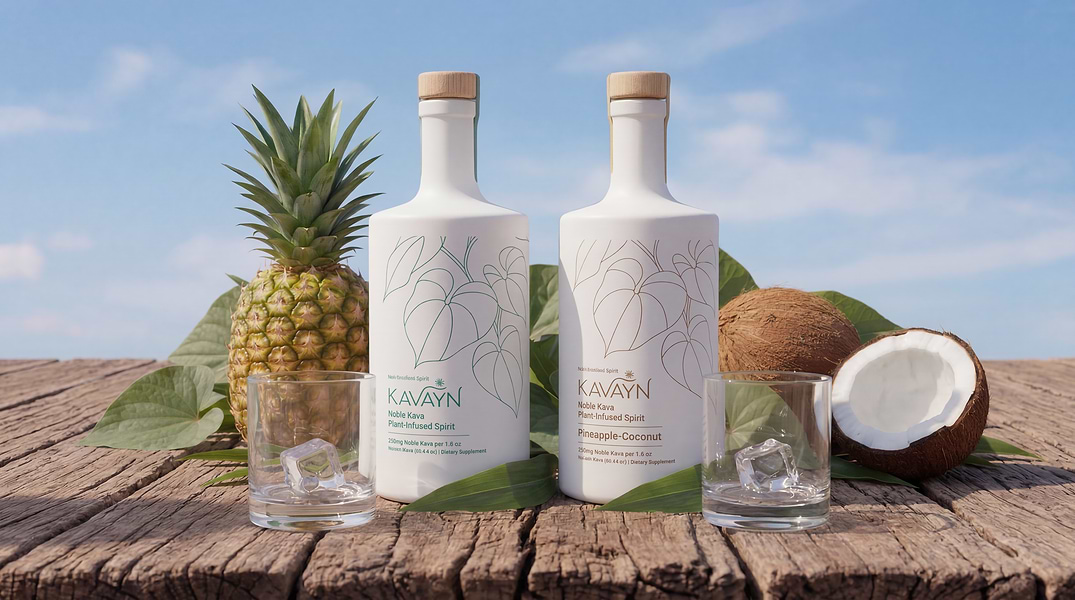
Non-alcoholic spirits — a bottle poured and mixed like a spirit. Kavayn's are 750 mL, seventeen 1.5 fl oz pours per bottle at 350 mg of kavalactones each — the stronger of the two servings, about 40% more per pour. Made to be built into a long drink over ice, or a mocktail, and poured for a room.
A snap is not a bottle you sip, and a bottle is not something you carry in a jacket. They answer different occasions rather than competing. Both are in the Kavayn range.
Suits: anyone who wants the drink without the preparation, and the same dose every time.
Gummies
Kava extract set into a chew. No water, no measuring, no preparation of any kind, and the earthy taste is largely masked by the flavouring — which for a lot of people is the deciding factor.
The trade-off is the one that applies to any extract: what you get depends entirely on what the maker put in. The kavalactone figure per gummy and per-batch testing are the only things that tell you anything real. A gummy that does not state its kavalactone content is telling you it would rather you did not ask.
Onset is generally slower than a liquid, because it has to be digested — so allow longer than you would for a shot or a strained drink. The convenience is the point: kava gummies travel, keep, and need no kitchen.
What ready-to-drink actually changes
Not the ritual. Kava has been the drink people gather around across the Pacific for centuries, and it slots into a Thursday evening the same way it always has — poured, shared, unhurried.
What it changes is the variability. Preparing kava by hand means the strength of tonight's drink depends on tonight's kneading. Standardising the extract moves that decision from the sink to the label: a known amount in every serving, tested every batch.
One thing worth being plain about: kava does not produce intoxication, and it is not a substitute for being drunk. Kava calm is a distinct feeling that becomes clearer as you learn to recognise it.
How to make kava from powder (traditional grind)
The traditional method:
- Measure your powder into a straining bag. A rough starting point is two tablespoons per cup of water, though this varies with the grind.
- Submerge the bag in room-temperature or cool water.
- Knead and squeeze it for 5 minutes. This is the step that determines strength, and it is the step people under-do.
- Wring the bag out thoroughly and discard the spent root.
- Serve. Traditionally in a shell, shared, and drunk in one go rather than sipped.
Cool water rather than hot, and time under the hands rather than heat, are what move kavalactones into the drink. Brief warming later doesn't waste a prepared drink — it's simply less pleasant. Sustained heat and light over weeks do reduce kavalactone content, which is why unopened kava belongs in a cupboard and opened kava in the fridge. Minutes in a glass and months on a sunny windowsill are not the same exposure.
You can read more on storing kava and on serving sizes.
What preparation cannot tell you is how strong the result is. Two people working from the same bag of powder, kneading for different lengths of time, produce noticeably different drinks. That isn't a flaw in the method — it's a property of preparing a plant by hand, and it's why the tradition is built around a shared bowl rather than individual measures.
Try it for yourself
Vanuatu noble kava. A measured dose in every serving. Tested every batch.