Alcohol-Free Social Drinking: A Host’s Kava Playbook
Jun 23, 2026
Summer is one long string of social occasions — backyard cookouts, weddings, patio happy hours, festivals, graduation parties. For a long time, "having a drink in your hand" at all of them meant alcohol by default. That's changed. More people than ever want alcohol-free social drinking — a real drink in hand that keeps them present at the party without the buzz, the calories, or the next-morning fog — and something better than a lukewarm soda to hold while they do it. This is your playbook for kava as that something better.
Quick answer: Alcohol-free social drinking has gone mainstream — the U.S. alcohol-free category is on track to top $1 billion in 2025, up 22% year over year.[1] Kava fits the moment because it does the social job alcohol used to: it helps you relax, loosen up, and connect — calm and clear-headed instead of drunk. Match the format to the occasion (snap packs for mobility, spirits for a proper cocktail, gummies for low-key sipping) and you've got a real drink for every summer event.
Why Alcohol-Free Social Drinking Went Mainstream
This isn't a fringe wellness trend anymore — it's where a huge share of social drinkers are heading. Nearly half of Americans planned to drink less alcohol in 2025, a 44% jump from 2023, and Gen Z and Millennials are leading the shift, with over 60% saying they prefer alcohol-free options in social settings.[2] The global low- and no-alcohol market sat around $25.7 billion in 2024 and is projected to nearly double by 2034.[2]
The most useful insight for a host: this is about moderation, not abstinence. About 92% of people buying non-alcoholic drinks also buy alcoholic ones — many practice "zebra striping," alternating between an alcoholic drink and an alcohol-free one across the same event.[1] So you're not planning for a handful of teetotalers in the corner. You're planning for most of your guests, who'll happily reach for a great alcohol-free option if you put one in front of them.
The Kava Playbook: Match the Drink to the Occasion
Kava's appeal at a social event is simple — it brings the unwind-and-connect feeling people chase with a first drink, minus the impairment and the hangover. Kava is widely used for relaxation, and clinical research has found it can reduce anxiety symptoms versus placebo;[3] the kavalactones guide explains how that calming effect works. The trick is matching the format to the setting.
Backyard BBQ or cookout
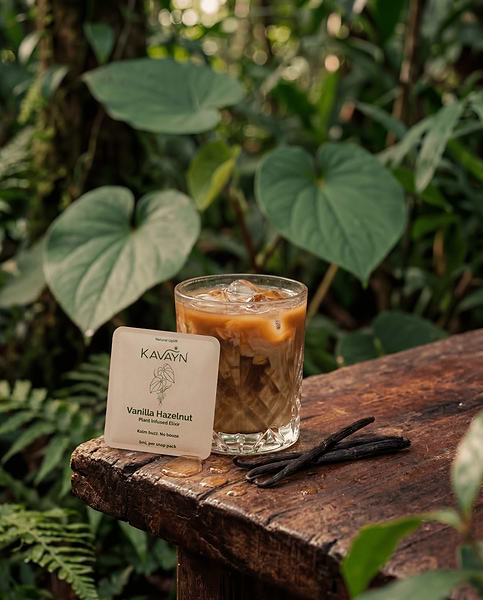
Casual, all-afternoon, hands-busy. You want something easy to sip while you're at the grill. A kava snap pack stirred into sparkling water with lime and a sprig of mint reads as a proper drink and is dead simple to batch. Set out a self-serve station so guests can mix their own — it doubles as a conversation starter for anyone who's never tried kava.
Weddings and big celebrations
June is peak wedding season, and the alcohol-free guest list is bigger than ever — designated drivers, parents of young kids, people who just don't drink. A small kava signature "mocktail" on the menu (a kava spirit mixed like a spritz or a bramble) means those guests get something celebratory in a real glass, not a self-conscious club soda. It's the difference between feeling included and feeling like an afterthought.
Patio happy hour and after-work drinks
This is kava's sweet spot. Happy hour is about decompressing from the day — exactly what kava is good at. A kava spirit built into a Negroni-style or paloma-style cocktail gives you the ritual of a "real" drink and the wind-down, then you drive home clear-headed and sleep fine. For the coffee-then-cocktail crowd, kava is a much kinder way to take the edge off than another round.
Dinner parties and hosting at home
When you're hosting, you're also the one staying sharp enough to run the kitchen. Kava gummies are the low-key option here — a measured, labeled dose you can take while you cook, with no glass to refill. Pair them with an alcohol-free aperitif for guests and you keep the social ritual without anyone (host included) overdoing it.
Festivals, concerts, and on-the-go
Mobility is everything here, and glass bottles usually aren't allowed anyway. Single-serve snap packs travel in a pocket and deliver a consistent dose without a cooler or a mixing setup — relaxation that fits in your festival kit.
How to Actually Serve Kava at a Social Event
A few practical notes make the difference between guests loving it and guests confused by it:
-
Lead with a recognizable format. Serve kava in a real glass with a garnish, or as a clearly labeled mixer. People relax into something that looks like a drink they know.
-
Mind the timing. Kava works best on a relatively empty stomach, so a welcome drink as guests arrive often lands better than one served mid-meal. The how long does kava last guide covers onset and timing.
-
Make it self-serve. A simple kava-and-sparkling-water station with citrus and herbs lets guests pace themselves and invites the curious to try it.
-
Support zebra striping. Offer kava alongside alcohol, not instead of it. Most guests are moderating, not abstaining — give them an easy alcohol-free round to alternate with.[1]
-
Keep doses sensible. Use labeled, noble-kava products so everyone knows what they're getting, and don't push refills the way an open bar does.
What to Tell Guests Who've Never Tried Kava
Set expectations and you'll get converts; skip it and you'll get puzzled faces. The honest pitch is short:
Kava makes you feel relaxed and sociable — calm and clear, not drunk. It's earthy and a little bitter, which is why mixers and garnishes help. A couple of things worth mentioning: many people feel kava more on their second or third try than their first (that's normal — the reverse tolerance guide explains why), and kava shouldn't be mixed with alcohol, so it's an either/or for the night, not a chaser. For anyone who wants the full background, point them to the kava basics guide.
Frequently Asked Questions
Does kava make you feel drunk?
No. Kava produces a relaxed, sociable calm without the impairment, slurred speech, or loss of coordination that comes with alcohol. Most people stay clear-headed and present — which is exactly why it works as a social drink. It's the unwind without the "drunk."
Can I mix kava with alcohol at a party?
No — kava and alcohol shouldn't be combined. Both are processed by the liver, and responsible-use guidance from bodies like NCCIH advises against mixing them.[4] Offer kava as the alcohol-free choice of the night. Guests who are "zebra striping" can alternate between an alcoholic drink and a kava drink across the event, but not mix them in the same glass.
How much kava should I serve guests?
Stick to labeled, noble-kava products and follow the product's serving guidance — one snap pack, one serving of spirit, or the gummy dose on the package. Kava isn't meant to be slammed like shots; a measured serving as a welcome drink, with the option of a second later, is the right pace for a social setting.
What does kava taste like, and how do I make it taste good?
Traditional kava is earthy and bitter. The easy fixes are citrus (lime, grapefruit), a touch of natural sweetness, fresh herbs like mint, and sparkling water. Kava spirits are formulated to mix into cocktails, and gummies sidestep the taste entirely — handy for guests trying it for the first time.
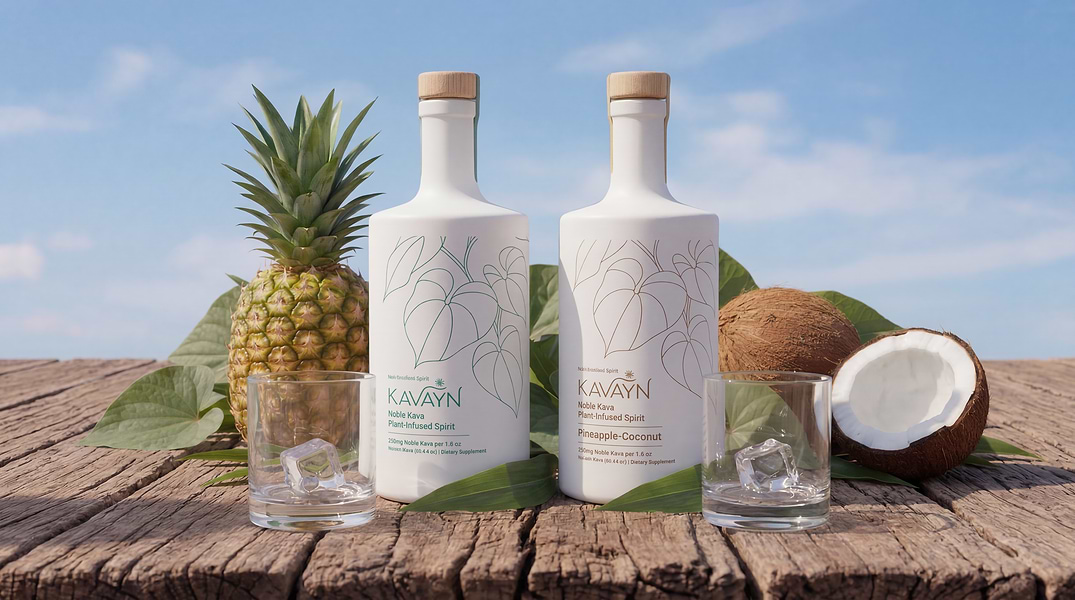
Hosting something this summer? Build your alcohol-free bar around Kavayn Snap Packs for easy mixing, Kava Spirits for a proper cocktail, and Kava Gummies for low-key sipping — so every guest has a real drink in hand, no alcohol required.
Kava is not intended to diagnose, treat, cure, or prevent any disease. Consult a healthcare provider if you have questions about kava and medications. Kava should not be combined with alcohol.
Sources
-
NielsenIQ. "Non-Alcohol Is No Longer a Niche — It's a Billion-Dollar Movement." NIQ, 2025. (U.S. alcohol-free category on track to exceed $1B in 2025, +22% YoY; ~92% of non-alcohol buyers also buy alcohol; zebra striping behavior.)
-
Beverage Daily. "How big is the low-no alcohol opportunity? Global market data for 2025." 2025. (Global low/no-alcohol market ~$25.7B in 2024, projected ~$46.5B by 2034; ~49% of Americans planned to drink less in 2025, +44% vs. 2023; 60%+ of Gen Z and Millennials prefer alcohol-free options in social settings.)
-
Sarris, J. et al. "Kava in the treatment of generalized anxiety disorder: a double-blind, randomized, placebo-controlled study." Journal of Clinical Psychopharmacology, 2013. (Kava reduced anxiety symptoms versus placebo.)
NCCIH. "Kava." National Center for Complementary and Integrative Health (NIH). (Responsible-use guidance; kava and alcohol/hepatic considerations.)
Try it for yourself
Vanuatu noble kava. A measured dose in every serving. Tested every batch.