Comparisons
Kava vs chamomile and herbal teas: what's the difference?
The difference is concentration and format.
Chamomile and herbal teas
- An infusion — steeped in hot water
- Low active content, variable by brew
- Gradual, subtle onset
- Short-lived
- Usually solitary, often at bedtime
Kava
- An extract — concentrated from the root
- Measured kavalactone content, stated per serving
- Onset 10–20 minutes
- Lasts 2–4 hours
- Social, and typically an evening drink
Herbal infusions are dilute by design. Steeping a flower or leaf in hot water extracts a small and inconsistent amount of whatever is in it — which is part of the appeal; a cup of chamomile is gentle and forgiving. Kava is the opposite approach: the root is extracted and concentrated, so a serving contains a measured, repeatable amount.
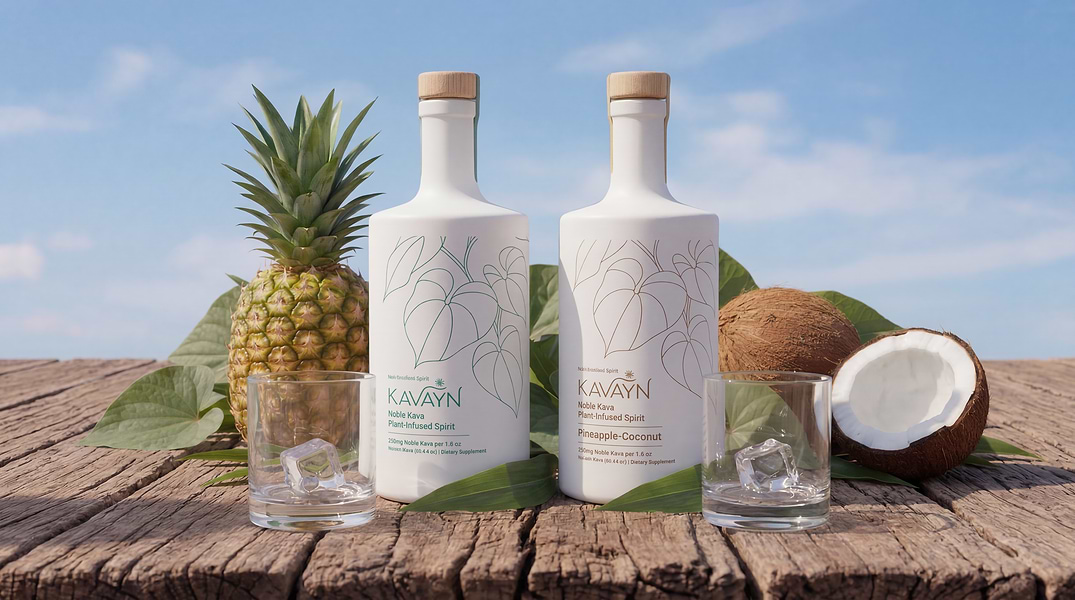
They also sit in different moments. Chamomile is a solitary drink at the end of the day. Kava is what people drink together — that's its entire traditional context, and it's why Kavayn's format is a spirit rather than a teabag.
Note that "kava tea" is a different thing from what Kavayn makes. Kava tea usually means root or instant powder in water — closer in strength to an infusion than to an extract, and much more variable.
Related questions
Try it for yourself
Vanuatu noble kava. A measured dose in every serving. Tested every batch.