Kava vs Alcohol for a Night Out: What Actually Changes?
Apr 28, 2026
You're at a gathering on a Friday, someone hands you a small coconut shell filled with a muddy-brown liquid, and you think: is this really going to work? Kava has been a social drink across Pacific Island communities for thousands of years — and it's been quietly showing up in American bars, party coolers, and dinner tables. If you've only known alcohol as your social lubricant, you've probably wondered what actually changes when you make the swap.
Quick answer: Swapping alcohol for kava on a night out means you'll feel calmer and more talkative — without the foggy, impaired feeling alcohol brings. A 2023 clinical trial found kava significantly reduced anxiety markers without impairing cognition.[6] The morning after looks completely different too: no headache, no regret, just clarity.
What Changes When You Replace Alcohol With Kava?
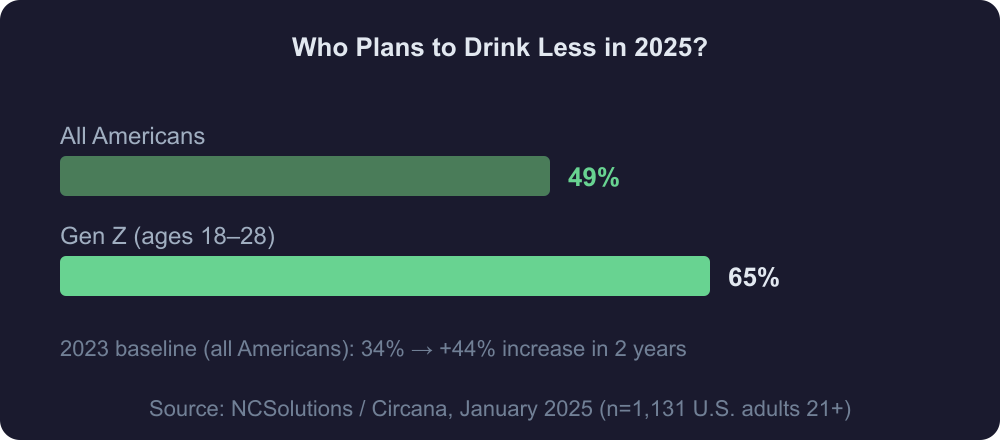
54% of U.S. adults now say they drink alcohol — the lowest figure in Gallup's nearly 90-year tracking history, down from 62% just two years prior.[1] More people are actively looking for something that delivers the social ease without the next-day cost. Kava fills that gap differently than sparkling water or a mocktail — it's pharmacologically active, meaning it actually does something in your body.
The change most people notice first isn't what's missing — it's what's present. Conversations feel easier. The low-grade tension of a crowded room fades. But your words don't slur, and your decisions don't get blurry. That combination is genuinely unusual, and it's why so many people who try kava socially keep coming back to it.
How Do Alcohol and Kava Feel Differently in a Social Setting?
What alcohol does at a gathering
What kava does at a gathering
The key difference: relaxed without foggy
How Does the Same Night Play Out?
At a bar
House party or dinner
Date night or networking event
The Morning After: Kava vs. Alcohol
This is the version most alcohol-alternative content skips. With a standard night of drinking, you're dealing with acetaldehyde toxicity, dehydration, disrupted sleep, and inflammation. A 2024 peer-reviewed study quantified exactly what that costs: on hangover days, workers lose nearly 25% of their productivity — and 91% of that impact comes from presenteeism (showing up but barely functioning), not calling in sick.[4]
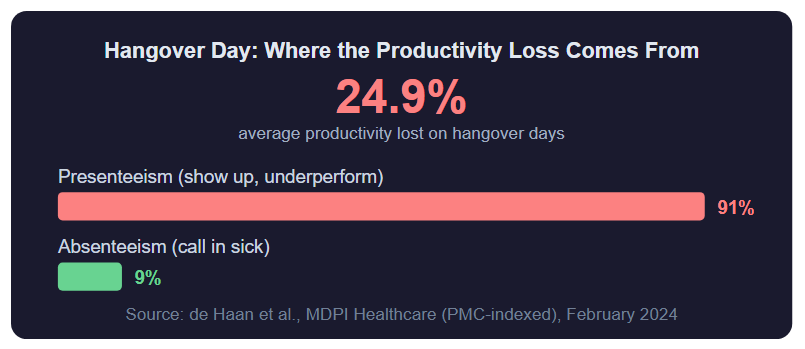
Most hangover impact isn't calling in sick — it's showing up and barely functioning.
After kava? Most people sleep normally — kavalactones have mild sleep-supportive properties for many users — and wake up without the cotton-mouth, headache, or brain fog. Some notice a mild residual calm. That's typically it. The day after a kava night is just a regular day. For a full look at how long kava's effects last and how the taper feels, see the how long kava lasts post.
Practical Stuff: Cost, Format, and Mixing
How much does a kava night cost?
Which kava format works best for a night out?
Can you mix kava and alcohol?
Technically yes, but it isn't recommended. Kava is processed by the liver, and combining it with alcohol places additional load on hepatic metabolism. The effects of both can amplify in unpredictable ways. If you're trying kava for the first time on a night out, skip the alcohol for that session — you'll get a much cleaner sense of how kava actually feels on its own. The responsible use guide has more detail on this.
Kava is not intended to diagnose, treat, cure, or prevent any disease. Consult a healthcare provider if you have questions about kava and medications or existing health conditions.
Who Gets the Most Out of Trying Kava on a Night Out?
The non-alcoholic beverage market recruited 61 million new consumers globally between 2022 and 2024,[8] and most of them aren't committed abstainers — they're social drinkers who want more options. The people who find kava most useful socially tend to fall into a few groups: those cutting back on alcohol without wanting to explain themselves all night, people who find alcohol takes too heavy a toll the next day, and straightforward social drinkers who got curious and never went back.
You don't have to be sober-curious to enjoy kava on a night out. You just have to be curious. Many regular kava drinkers still drink alcohol on other occasions — they reach for kava when they want the social ease without the next-day cost.
Frequently Asked Questions
Will I feel drunk on kava?
Can I drive after kava?
Is kava appropriate for parties and social events?
How long does kava last compared to alcohol?
Does kava interact with medications?
It can. Kava is metabolized by the liver via CYP450 enzymes and may interact with medications processed the same way — including some antidepressants, anxiolytics, and blood thinners. If you take regular medication, check with your healthcare provider before trying kava. The kava ingredients label guide covers this in more detail.
Ready to try it at your next gathering? Kavayn Snap Packs are an easy way to start — bring a couple to your next event and see how the night plays differently.
Sources
-
Gallup. "Drinking Rate at New Low as Alcohol Concerns Surge." August 2025.
-
NCSolutions / Circana. "Nearly Half of Americans Plan to Drink Less Alcohol in 2025, Up 44% From 2023." January 2025.
-
NCSolutions / Circana. "Americans Drinking Less in 2025." January 2025.
-
de Haan, M. et al. "Absenteeism, Presenteeism, and the Economic Costs of Alcohol Hangover in The Netherlands." MDPI Healthcare, February 2024.
-
National Institute on Alcohol Abuse and Alcoholism (NIAAA). "Economic Burden of Alcohol Misuse in the United States."
-
Savage, K., Sarris, J. et al. "Neuroimaging Insights into Kava's Effects on Brain GABA in Generalized Anxiety Disorder: A Randomized Controlled Trial." MDPI Nutrients, November 2023.
-
LaPorte, E. et al. "Neurocognitive Effects of Kava (Piper methysticum): A Systematic Review." Human Psychopharmacology, 2011.
-
IWSR. "Key Statistics and Trends for the US No-Alcohol Market." 2024–2025.
-
NCSolutions / Circana. "Non-Alcoholic Beer Consumer Purchase Panel Data." January 2025.
Dry Atlas / Fortune Business Insights. "The Rise of Kava: Market Dynamics and Future Opportunities." 2024.
Try it for yourself
Vanuatu noble kava. A measured dose in every serving. Tested every batch.