


Non-Alcoholic Spirits for Dry January: What to Choose
Nov 20, 2026
Last Updated: November 19, 2026
Quick Summary
The best non-alcoholic spirits for Dry January are those that state 0.0% alcohol on the label, list the active ingredient dose, and come with third-party testing. Judge each bottle on cost per serving, sugar content and flavor profile before you buy, so you can keep your month on track with a drink you actually enjoy.
- Choose products that state 0.0% alcohol explicitly if you are avoiding alcohol entirely.
- Ask sellers for a certificate of analysis (COA) showing identity, potency and contaminant testing.
- Divide the bottle price by the stated servings to compare true cost per drink.
- Check the total sugar line on the nutrition panel rather than front-of-pack claims.
- Start with one serving per night and adjust based on how it feels.
Table of Contents
- Why Non-Alcoholic Spirits Are Becoming a Dry January Staple
- What to Look for When Choosing a Non-Alcoholic Spirit
- How to Use Non-Alcoholic Spirits in Cocktails and Mocktails
- Best Non-Alcoholic Drinks Low in Sugar
- Staying Clear-Headed and Engaged at Social Events
- Where to Buy Non-Alcoholic Spirits and How to Get Started
- Your Next Step: Pick a Bottle for Your Dry January Plan
- Frequently Asked Questions
Why Non-Alcoholic Spirits Are Becoming a Dry January Staple
Nonalcoholic drinks are no longer a niche corner of the bar menu. U.S. off-premise sales of nonalcoholic beer, wine, and spirits exceeded $1 billion in the 52 weeks ending January 3, 2026, up 22% from $925 million (Learn Brands 2026 report on what Americans drink instead of alcohol).
Interest in drinking less is broad. According to O-I Glass (2025), 49% of U.S. adults said they planned to drink less alcohol in 2025, a 44% increase compared with 2023. Nearly half of adults ages 18 to 34 also said they had chosen at least one nonalcoholic beer, wine, spirit, or mocktail, according to Food Dive (2026).
Dry January has become the moment many people test that change. A scoping review of Dry January and its evidence base describes it as a temporary alcohol-abstinence challenge and examines where future research should go. Dry months rarely fail on willpower. They fail when the evening has no shape to it, and a well-made spirit gives that evening a ritual.
Not every nonalcoholic drink suits everyone trying to cut back. A Stanford Medicine discussion of nonalcoholic beverages for people with alcohol problems raises caution on this point, so read labels closely and choose what fits your own goals.
What to Look for When Choosing a Non-Alcoholic Spirit
Most roundups tell you which bottles to buy. Fewer tell you how to judge one for yourself. You can read a kava ingredients label to check quality and dose before you buy. A consistent set of criteria matters more in this category than in almost any other, because labels are inconsistent and the category is still young. Use the checklist below on any product, including the ones on this page.
1. Read the label category first. "Non-alcoholic" and "alcohol-free" are not interchangeable on U.S. shelves. Check the stated alcohol-by-volume figure on the label. If you are avoiding alcohol entirely for medical, pregnancy, or recovery reasons, look for products that state 0.0% explicitly.
2. Check the active ingredient and its dose. Many spirits in this category are built around a functional botanical. Whatever the botanical is, the label should tell you how much of the active compound each serving carries. A product that lists an ingredient but not a dose gives you no way to compare it with anything else.
3. Ask for third-party testing. A certificate of analysis (COA) is the document that shows a product was tested for identity, potency, and contaminants. Ask any seller for one before you buy.
4. Confirm the varietal or source. For botanical products, the specific plant variety matters. Noble kava, for example, is a commonly named variety, so confirm which one a product uses. Ask any brand which varietal or source it uses and whether it publishes that information.
5. Match the flavor profile to how you drink. Some spirits are built to be sipped neat, others to disappear into a mixer. Decide which you want before you buy, because a spirit designed for mixing can taste thin on its own and a sipping spirit can overwhelm a cocktail.
6. Compare cost per serving, not cost per bottle. A 750ml bottle at $64.99 that pours 17 servings works out to about $3.82 per drink. Divide the bottle price by the stated servings before you decide.
7. Look at the full nutrition panel. Calories, sugar, and sweeteners vary widely. A product with no added sugar and a short ingredient list is easier to fit into a Dry January plan than one built on syrups.
8. Check availability before you commit. Some products are online-only, some sit in grocery aisles, and some appear only on restaurant menus. If you cannot find a specialty product locally, confirm shipping restrictions for your state before ordering.
Watch out: compare the stated dose with the serving size on the label rather than trusting either number alone.
Use these checks to judge any non-alcoholic spirit, including the products on this page.
| Check | What to look for | Why it matters |
|---|---|---|
| Label category | Stated alcohol-by-volume; 0.0% if fully avoiding alcohol | "Non-alcoholic" and "alcohol-free" are not interchangeable |
| Active ingredient dose | Amount of active compound per serving | Lets you compare products |
| Third-party testing | Certificate of analysis (COA) | Shows identity, potency and contaminants were tested |
| Varietal or source | Named plant variety, e.g. noble kava | Botanical products differ by variety |
| Flavor profile | Sipping spirit or mixing spirit | Avoids a thin or overwhelming drink |
| Cost per serving | Bottle price divided by stated servings | Bottle price alone hides the true cost |
| Nutrition panel | Calories, sugar and sweeteners | Sugar varies widely between products |
| Availability | Online-only, grocery or restaurant; state shipping limits | Confirms you can actually get the product |
How to Use Non-Alcoholic Spirits in Cocktails and Mocktails
A non-alcoholic spirit works like a base, not a substitute for one. Pour a shot over ice, top it with sparkling water, and add a citrus wedge for a simple highball. That is often the easiest way to start.
For a fuller drink, pair the spirit with juice, tonic, or a splash of ginger beer. Our Unflavored spirit is built to disappear into a mocktail, so it works well when you want the calm without changing the flavor. The Pineapple-Coconut spirit leans tropical and pairs naturally with citrus and soda.
Start small. Mix one shot per drink until you know how a serving affects you, and measure the pour the same way each time.
Best Non-Alcoholic Drinks Low in Sugar
Sugar is the quiet problem in the non-alcoholic aisle. Many mocktails and ready-to-drink alternatives get their flavor from syrups, juices, and sweeteners, so a drink that looks virtuous can carry more sugar than a regular soda. The fix is not to avoid flavor. It is to build drinks around bases that do not need sugar to taste good.
Where the sugar hides. The biggest sources are flavored syrups, fruit juice concentrates, tonic water (which is sweetened unless labeled diet), and pre-batched cocktail mixes. A single ounce of flavored syrup can add several grams of sugar before you have poured anything else.
Low-sugar building blocks. Sparkling water, unsweetened tea, black coffee, citrus juice in small amounts, and dry or diet tonic are the workhorses. A spirit-based drink built on sparkling water and a citrus wedge can stay under a few grams of sugar per serving while still tasting like a real drink.
Read the panel, not the front of the bottle. Nutrition panels list sugar per serving, and serving sizes vary wildly between products. Compare per 100ml or per single serving rather than per bottle. Also scan the ingredient list for sweeteners, including ones that do not raise sugar counts but can affect how a drink tastes and sits with you.
A simple low-sugar template. One shot of a non-alcoholic spirit over ice, topped with plain sparkling water, a squeeze of lime, and a thin citrus twist. That is a drink with a strong flavor, almost no sugar, and a cost per serving well below a bar mocktail.
When sweetness is the point. Some occasions call for a sweeter drink. In that case, use a small amount of real juice or a measured teaspoon of syrup rather than a pre-sweetened mixer, so you control the total.
Watch out: "no added sugar" does not mean sugar-free, since juice and concentrate still count, so check the total sugar line rather than the front-of-pack claim.
Staying Clear-Headed and Engaged at Social Events
The goal at a party is to stay present, not to disappear into the couch. Choose a spirit you can sip slowly, keep a drink in hand, and pace your servings the way you would with any beverage.
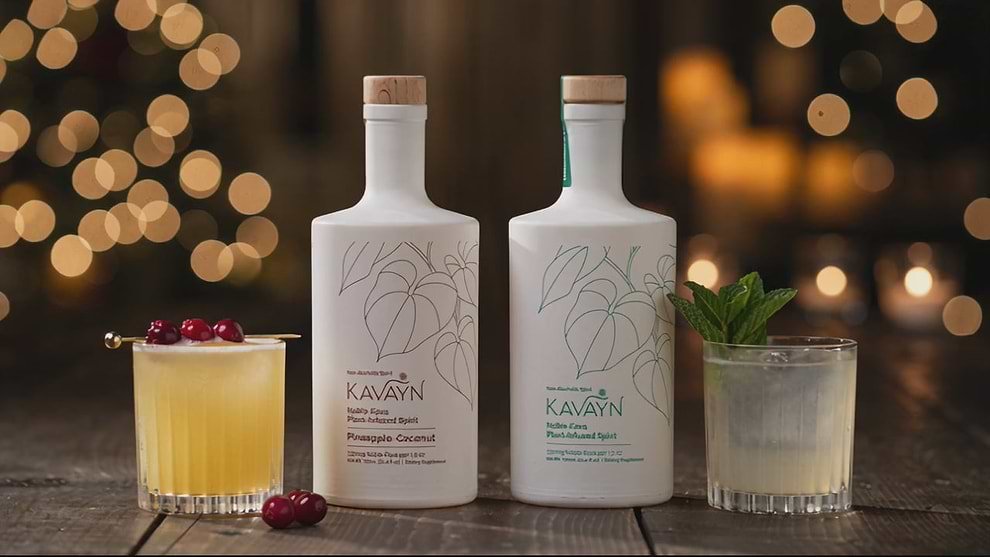
A common mistake is treating a calming drink as a reason to stop paying attention to the room. Use the drink to ease into conversation, then stay engaged with the people around you.
Where to Buy Non-Alcoholic Spirits and How to Get Started
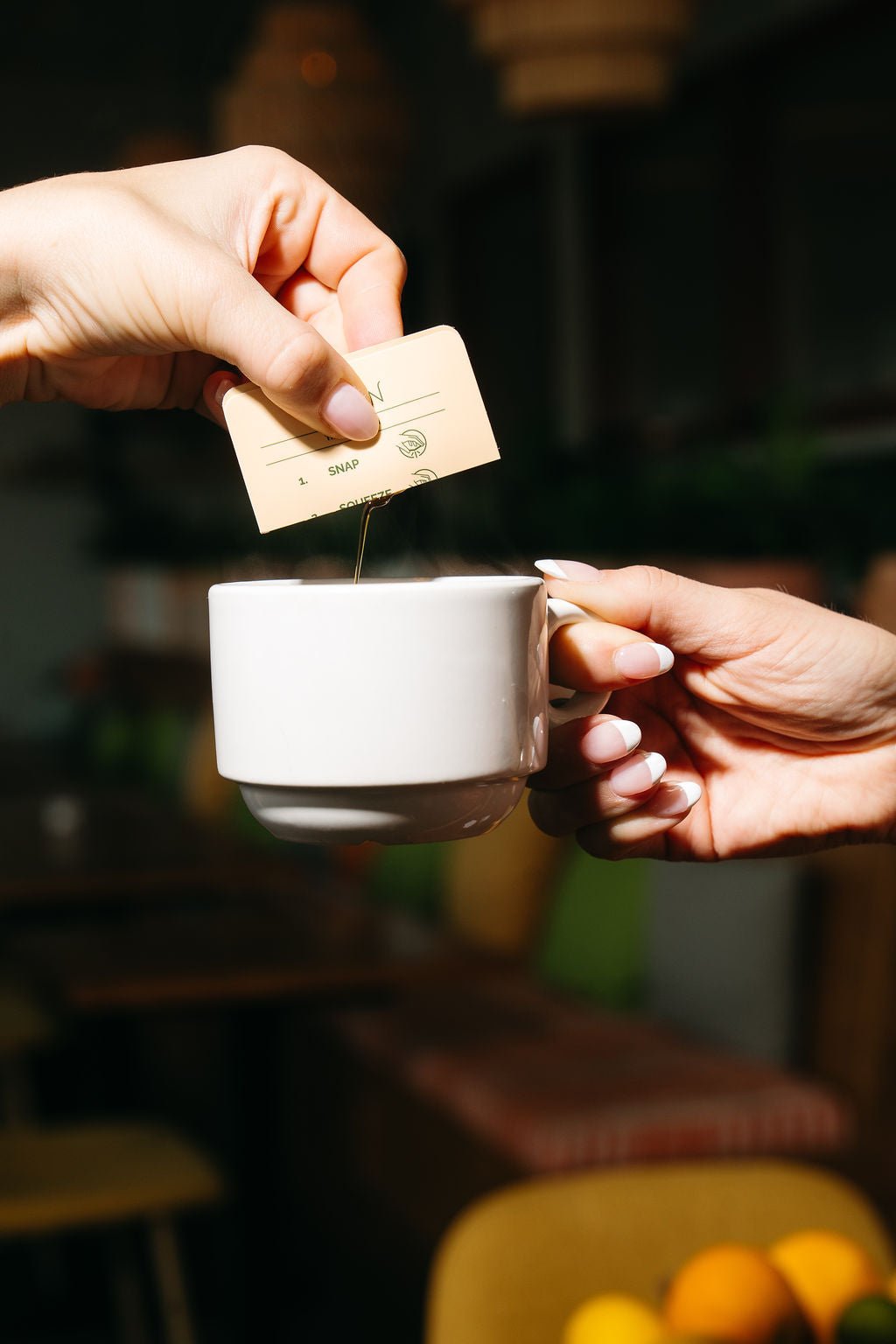
If you want to try before you commit, the Vanilla-Hazelnut Kava Extract Snap Packs are the easiest entry point. Snap packs are a portable, easy-to-mix format, so you can test a serving at home or pack one for travel.
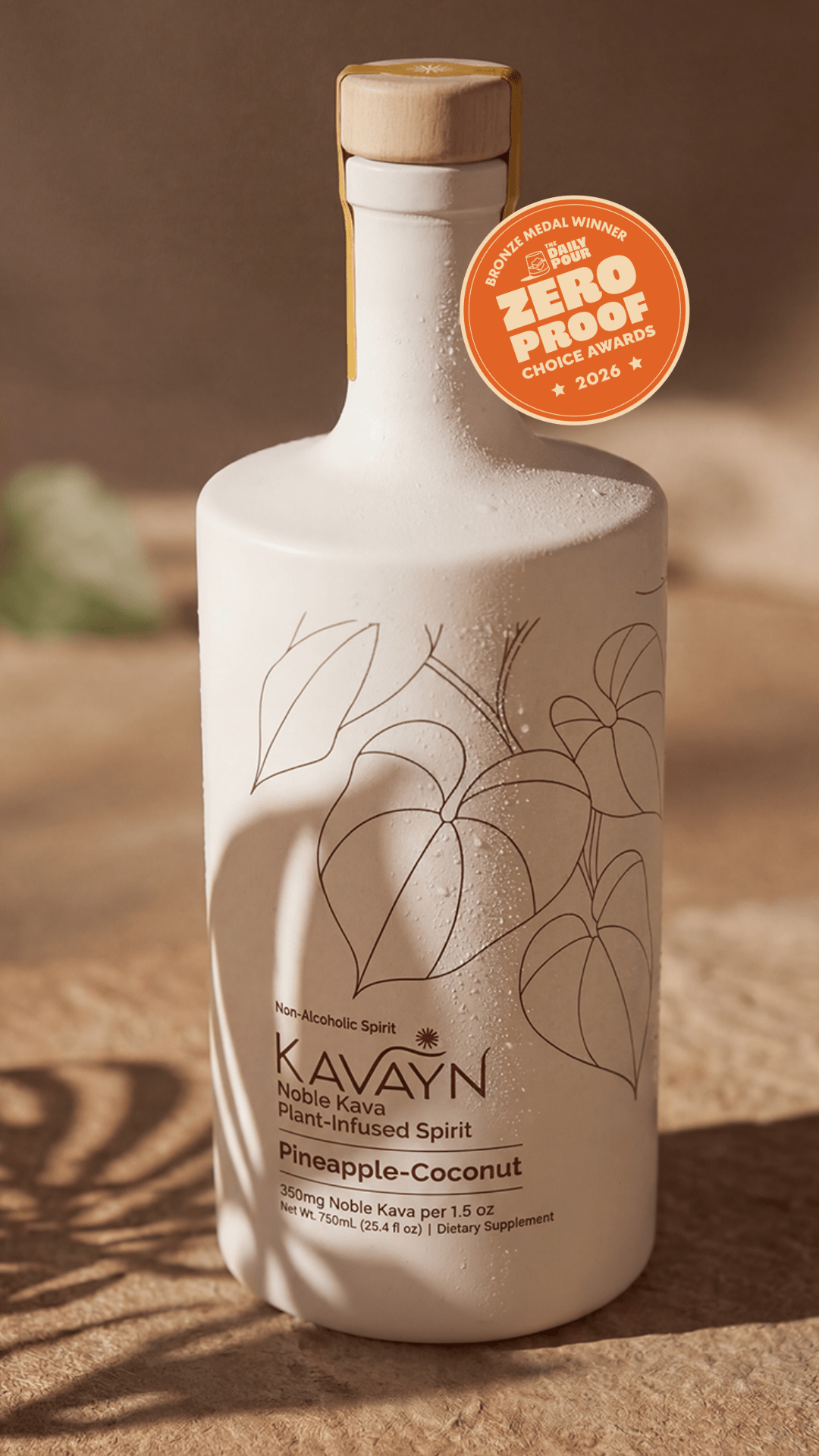
For a bottle to keep on hand, the Pineapple-Coconut Noble Kava Non-Alcoholic Spirit is available at $64.99 for 750ml. Start with one serving per night, see how it feels, and adjust from there.
Your Next Step: Pick a Bottle for Your Dry January Plan
Choose the format that fits your month. Snap packs suit travel and a measured start, while a full bottle suits nights at home and sharing with friends. If you are still unsure whether kava suits a dry month, read our Is kava good for Dry January? answer, and check What does kava taste like? before you choose a flavor.
Our team at Kavayn is ready to help you pick the right product for your goals. Browse the range and find the calm, clear-headed evening you have been looking for.
Frequently Asked Questions
What are some good non-alcoholic drinks to have during Dry January?
Dry January drinkers often reach for sparkling water, alcohol-free beer and wine, and mocktails built on non-alcoholic spirits. Kavayn's Unflavored Noble Kava Non-Alcoholic Spirit, sold in a 750 ml bottle for $64.99, works as a neutral base you can add to juice, sparkling water or mocktails. Each bottle provides 17 servings of 350mg kavalactones per 1.5 fl oz shot, so the serving size is easy to track. Pick a drink you enjoy with the same ritual you used to give a glass of wine.
Are there non-alcoholic spirits that taste like alcohol?
Some non-alcoholic spirits are designed to deliver the botanical bitterness and warmth of traditional spirits without the alcohol. Taste varies a lot between products, so look for a description of the flavor profile and try a small amount before committing to a full bottle. Kavayn's Pineapple-Coconut Noble Kava Non-Alcoholic Spirit, at $64.99 for 750 ml, is fruity with herbal bite, which many people find closer to a spirit than a flavored soda.
How do you use non-alcoholic spirits in cocktails?
Treat a non-alcoholic spirit the way you would treat its alcoholic counterpart: stir or shake it with citrus, bitters and sweetener, then top with tonic or soda. For a spritz-style drink, add sparkling water and a squeeze of lime over ice. An unflavored spirit works well as a base for a mocktail because it does not change the flavor of your mixers. Measure shots consistently so each drink has the same strength.


